Hypnotherapy for Depression: How We Actually Work With Low Mood

You can’t really understand depression without looking at the life someone is living, or the life someone has lived.
When people hear the phrase hypnotherapy for depression, they sometimes imagine lying back with their eyes closed while a hypnotherapist repeatedly tells them to feel happy, think positively and wake up transformed.
That isn’t how I think about depression, and it isn’t how I was trained to work with it.
Depression is usually much more complex than simply “feeling sad”. It can affect motivation, sleep, concentration, relationships, behaviour, self-worth, the body, and perhaps most importantly, a person’s ability to imagine that life could ever feel different.
So when I work with depression or persistent low mood, I’m interested in a much bigger question:
What is keeping this particular person’s depression going?
And from there: What needs to change?
Hypnosis can be a very useful part of that process, but it is only one part.
My approach combines hypnotherapy
...Why Do I Feel So Joyless? Anhedonia During Menopause

“Who are you when there’s nothing left to prove?”
This was the title of an email that popped into my inbox recently, and I have to say, it captured something I’d been feeling for quite a while.
I’d been talking about anhedonia with my friend and colleague recently. Anhedonia is the clinical name for a reduced ability to feel pleasure, interest or enjoyment. It can feel as though the things that used to light you up have somehow lost their voltage.
You can still get out of bed. You can still work. You can still put the washing on, answer emails and have conversations. From the outside, everything's fine.
But inside, everything feels a little bit… beige.
You can't really be arsed to go on that holiday you booked 5 months ago.
The crafting project you used to enjoy feel a bit boring.
The thought of socialising, achieving or planning fills you with dread.
And because anhedonia can be a symptom of depression, it’s important to take it seriously.
[Quick caveat....A persisten...
Summer Depression and Hypnotherapy: When Sunshine Starts to Feel Heavy

Everyone talks about the winter blues: grey skies, short days, damp coats, and that familiar British gloom that creeps under the door and sits on your chest.
Far fewer people talk about summer depression.
Because summer is meant to be the easy season, right? Picnics, bare arms, long evenings, flirtation, freedom and Aperol-coloured possibility. Everyone appears to be living inside an advert for joy.
So when summer arrives and your mood drops, it can feel deeply confusing. You may feel anxious, exposed, tired, restless, flat or strangely trapped, as though everyone else received the manual for summer while your nervous system is still rummaging through a drawer full of tangled chargers.
I understand this personally.
For years, I used to experience terrible winter SAD. It was crippling. I was teaching singing at the time, doing lesson after lesson, feeling bored, heavy, tired and depressed. Winter would arrive and something in me would wither.
I explored food, sugar, energy and hab...
How to Get Through The Hardest Part of Change

In my twenties, I decided I wanted to learn to ride a motorbike.
It didn't go well.
On the day of my test, it was raining. I fell off the bike just before the exam and promptly decided that perhaps motorcycling wasn't for me after all. I went home, licked my wounds, and put the dream in a box.
Fifteen years passed.
Then life presented me with another opportunity.
This time I had a boyfriend who rode a motorbike, which certainly added fuel to the fire. I signed up for lessons and convinced myself that this was going to be the year.
The problem was that reality looked very different from the fantasy.
The lessons were expensive, it was January, the weather was ice cold and the bikes were h.e.a.v.y.
And whilst nobody likes to admit it, learning to manoeuvre a large motorbike can be physically demanding, particularly when you're a relatively small woman trying to control a machine that seems determined to remind you of the laws of gravity.
But even so, week after week I turned...

Why Quitting Smoking Feels So Hard (It’s Not Just Nicotine)

Because smoking is rarely just something you do.
Over time, it becomes a relationship you have.
And relationships are far harder to untangle than habits.
At first, a cigarette might have been curiosity. Rebellion. Belonging. A way to fit in at school, survive stressful jobs, punctuate a night out, or feel older, calmer, cooler, less awkward.
But somewhere along the way, the cigarette quietly changes shape.
It becomes the pause.
The exhale.
The companion during loneliness.
The little “reward” at the end of a hard day.
The private moment outside when everything feels too loud.
And this is why so many intelligent, self-aware people feel confused by smoking.
Because part of them genuinely wants to stop.
And another part still experiences smoking as emotionally useful.
This is also why shaming people into stopping rarely helps.
If quitting smoking were simply about information, nobody would smoke anymore. We all know the risks. The packets practically scream at us in fluoresce...
Menopause, Dopamine, and the “New ADHD” Feeling: What’s Really Going On?

Recently, on a trip to Milan, I let myself “go there”… like really “go there.”
The gelato, the pasta, the shopping.
I see myself as an N of 1 experiment and before the trip, I’d been fairly restrained as I was in “body engineering” mode, so I made an intentional decision to get swept up in it all. Just for the sheer pleasure of playing with life (and also exploring my emerging — stronger — Italian identity).
By the third day of this cultural experiment, my digestive tract felt like burning embers and my brain kept grabbing at the thought of “what’s next” like a Duracell bunny.
It was the morning of our departure as I sat waiting for my husband to finish his text, belly and suitcase bloated, when a curiosity popped into my head.
I asked myself the question…
“Now that I’m no longer driven by my reproductive hormones (oestrogen, progesterone and testosterone), am I now driven by my brain hormones (dopamine, serotonin etc.) instead?”
A very clunky question I know, but nevertheless, ...
Why Do I Feel Anxious When Nothing Is Wrong?

Let me begin by saying, if this is you right now, I sympathise.... I've been there with bells on.
But I want to begin this piece of writing by disrupting the idea that "nothing is wrong"
Because that's not quite true.
Not in the way we’ve been taught to think about it.
The Myth: “Anxiety Comes Out of Nowhere”
We’ve been conditioned to believe that anxiety is random.
That it just… happens. Like a glitch in the system. Like your body has gone rogue.
But here’s the truth:
Nothing in the human system goes wonky all by itself.
Your body is not careless, broken or making mistakes.
Life, by its very nature, is self-organising. It is constantly attempting to move towards balance, regulation, coherence.
So if something isn’t resolving on its own…
it’s not because nothing is wrong.
It’s because something deeper hasn’t yet been seen yet. Ergo, we need to look beneath the surface.
“But My Life Is Fine…”
This is where the confusion creeps in.
Because you might have a stable job...
Why Do I Sabotage Myself?

Honey, you don't.... there's no such thing as self sabotage. It's a constructed label. I'll unpack it for you, but first let's start at the beginning.
“Why do I keep sabotaging myself?”
It’s one of the most common questions I hear.
And I completely understand why.
On the surface, it does look like sabotage.
You say you’ll go to the gym… and you don’t.
You plan to eat well… and you reach for chocolate.
You want the relationship to work… and you pull away.
You commit to the business idea… and then procrastinate.
From the outside, it looks like you’re getting in your own way.
But as the charming rebellious sagittarius that I am, I'd like to challenge this idea.
The Hidden Assumption Behind “Self-Sabotage”
The idea of self-sabotage rests on one very important assumption:
That there is a correct way to behave…
And that you are deviating from it.
But who decided what “correct” is?
Let’s take something simple.
You don’t go to the gym one morning.
Is that sabotage?
Or is it your b...
Does Hypnotherapy Really Work? Brighton Hypnotherapist Shares the Research
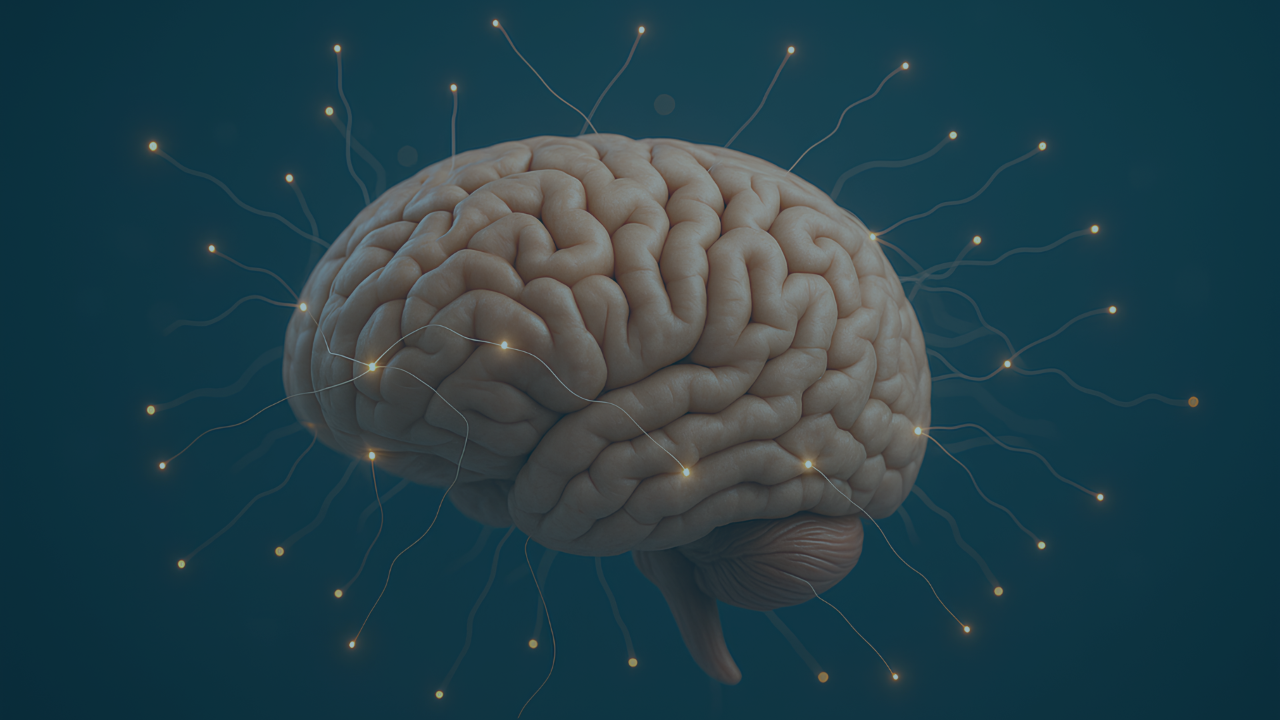
Hello friend. If you're searching for Hypnotherapy Brighton or looking for a Brighton hypnotherapist, there is a good chance you are asking one important question before booking your first session:
Does hypnotherapy actually work, or is it just a stage trick?
It’s a fair question. Hypnosis has been surrounded by myths for decades. Swinging pocket watches. People clucking like chickens. Magicians in velvet jackets commanding the audience.
But clinical hypnotherapy is something very different.
Over the past 40 years, hypnosis has been studied in hospitals, psychology departments and pain clinics around the world. And the findings are increasingly clear: hypnosis can be a powerful therapeutic tool when used in the right context.
In this article, I want to walk you through what the research actually says. Not the hype. Not the marketing. But the science behind hypnotherapy.
What Is Hypnotherapy Really Doing in the Brain?
Hypnosis is best understood as a state of focused attention...

Free Relaxation Hypnosis
Drift into a wonderful state of relaxation fully guided by me to help your body and mind rest and restore....and breathe.
