When Rest Won’t Come Unless You Eat: Menopause and the Flight Nervous System
There’s a moment in the evening that many women recognise once they reach perimenopause or menopause.
The day has been full.
Productive, even.
You’ve eaten properly, moved your body, done what needed to be done.
You may even be on a medication that is supposed to quiet appetite altogether.
And yet, as the light fades, something wakes up inside you.
Not hunger exactly, not even emotional eating in the way it’s usually framed.
More like… a pull.
A niggle.
A sudden and very specific interest in something crunchy, sharp, stimulating.
An oral something.
It can feel slightly perplexing. You might even translate it as a lack of willpower, even though somewhere deep down you know that’s not really true. (And for the record, it definitely isn’t.)
This is especially uncomfortable for women who are used to being capable, regulated, and in control. Women who don’t usually find themselves circling the cupboards but well…. are.
Your body isn’t being difficult.
It’s trying to find a way of relaxing that actually suits your nervous system profile.
What often shows up as evening snacking in midlife is not a failure of discipline, nor a breakdown of willpower. It’s not a nutritional problem waiting to be solved either.
Ready for the real answer?
It’s a nervous system looking for an ending.
A nervous system looking to close a loop.
A nervous system that has latched onto jaw movement and oral stimulation as a quick and reliable way to downregulate.
This is dopamine territory.
This is dopamine-seeking via chewing, crunching, and rhythmic jaw movement, helping you close the loop on that oddly familiar, open-ended feeling that starts early in the day and hums quietly underneath everything else.
That somatic sense of: Have I done enough yet?
But let’s backtrack for a moment.
Long before menopause, many women learned how to get dopamine boosts in ways that were socially rewarded and quietly applauded.
From responsibility.
From productivity.
From staying alert.
From being needed.
From holding everything together internally while moving very quickly through the world.
Dopamine, after all, isn’t just about pleasure. It governs motivation, effort, momentum, and crucially, the ability to feel that something has been completed.
For years, oestrogen and progesterone softened the edges of this way of living. It buffered the system, allowing adrenaline-fuelled days to resolve into rest with very little negotiation. The body could be pushed and then persuaded to stand down pretty much instantly.
Menopause removes that buffer.
And in doing so, she’s not trying to ruin your life. She’s trying to reveal something that’s no longer working.
As oestrogen fluctuates and progesterone declines, dopamine signalling becomes less efficient. The brain has to work harder to achieve the same sense of satisfaction, closure, and “enough” that it once generated automatically.
For women with fast, flight-dominant nervous systems, this change is often felt first in the evenings.
By the time the day draws to a close, dopamine is simply… spent.
So the nervous system does what it has always done.
It looks for the fastest, most reliable way to complete the cycle.
To close the loop.
Crunchy food works remarkably well.
Jaw pressure.
Rhythm.
Sound.
Predictable sensory reward.
From the perspective of the nervous system, it’s an efficient regulator. A temporary full stop. A way of saying:
“aaaaannnnnd relax… we’re done now.”
And for a moment, it works.
But it doesn’t last.
Because food is being asked to do a job it was never meant to do.
This is why evening eating so often feels mechanical rather than emotional. There may be no story attached to it. No comfort being sought. No hunger present.
Just an urge.
A need for something to click into place.
To literally resolve.
This is particularly true for women who have lived much of their lives in motion. Women who think quickly, take responsibility seriously, and rarely give themselves a clean boundary. A proper full stop.
And contrary to the cultural narrative….menopause doesn’t create this pattern, it exposes it.
Side note: if this resonates, you may recognise echoes of it in burnout patterns explored more deeply here:
👉 https://www.sallygarozzo.com/blog/stressedoutburnedout
Back to this blog.
The problem isn’t that women don’t know how to rest, it’s that rest without a felt sense of completion no longer lands.
The nervous system cannot stand down if it still thinks the day is still open.
So it stays alert.
And if no clear ending is provided, it creates one… quickly… by discharging pent-up energy through chewing.
Efficient. Effective. Not ideal. But clever.
This is where a different kind of dopamine close becomes essential, especially for those flight types who laugh in the face of a ‘wind down routine’ or a ‘meditation’.
This is about creating a deliberate, embodied ending.
A way of telling the nervous system, without ambiguity, that nothing more is required today.
When the system receives that message, cravings often soften on their own because they’re not longer needed as nervous system regulators.
Interestingly, many women intuitively reach for tools that create closure, even if they don’t have the language for it.
Tidying, for example.
I’m not talking about endless domestic work, which has no natural endpoint and often ramps the system up further, but contained tidying. A desk. A small workspace. An office corner or clearing out a drawer.
When a bounded area is put back into order, visual threat reduces. The brain registers completion.
Work is over.
The kitchen, on the other hand, is rarely a place of closure. It’s relational, cyclical, symbolically loaded, and never truly “done”.
Leaving it until morning, I think, is wisdom.
This reframing of attention and closure is explored further here:
👉 https://www.sallygarozzo.com/blog/salvage-attention
The same is true of writing a short list for the next day.
I’m not talking about a sprawling catalogue of obligations that makes your nervous system sweat, but a contained holding space.
When tasks are moved out of working memory and placed somewhere external, the nervous system no longer has to keep them alive.
The loop closes.
For women with anxiety, ADHD traits, or trauma histories, this can be the difference between an evening that settles and one that spirals.
If black-and-white thinking or mental looping are familiar companions, you may also want to read:
👉 https://www.sallygarozzo.com/blog/absolute-thinking
Sooooooo, what menopause is asking for is more honesty, not more control.
It becomes increasingly uncomfortable with this ongoing borrowing of dopamine to carry you into rest. It will no longer tolerate endings that are ‘implied’ - it needs them to be fully embodied.
Our systems now want clarity.
And when they don’t get it, food becomes the scapegoat.
That’s why shame around evening eating is so misplaced. The behaviour isn’t the problem, it’s actually a solution your nervous system found in the absence of a better one.
And menopause, far from being the villain, is simply saying:
“Maybe there’s another way now, babes.”
This is also why hypnotherapy can be such a powerful intervention at this stage of life. It works directly with completion, safety, and nervous system signalling.
It helps bring balance back into the day. It explores where those flight patterns came from in the first place, and gently teaches you how to give them back.
If you’re exploring this work you can find out more about Hypnotherapy Brighton (and online) here:
👉 https://www.sallygarozzo.com
So, to conclude.
Menopause isn’t the enemy we’ve been lead to believe it is… it the beacon showing you something essential.
Let it help you remove those old compensatory strategies that once worked but now cost too much.
And in doing so, it offers a quieter, deeper invitation.
To end your days properly.
To allow rest to arrive without needing a rapid discharge through oral stimulation.
Give your body the clean ending it’s asking for.
And once it has one, it often needs nothing more.
_________________________________________________________________________
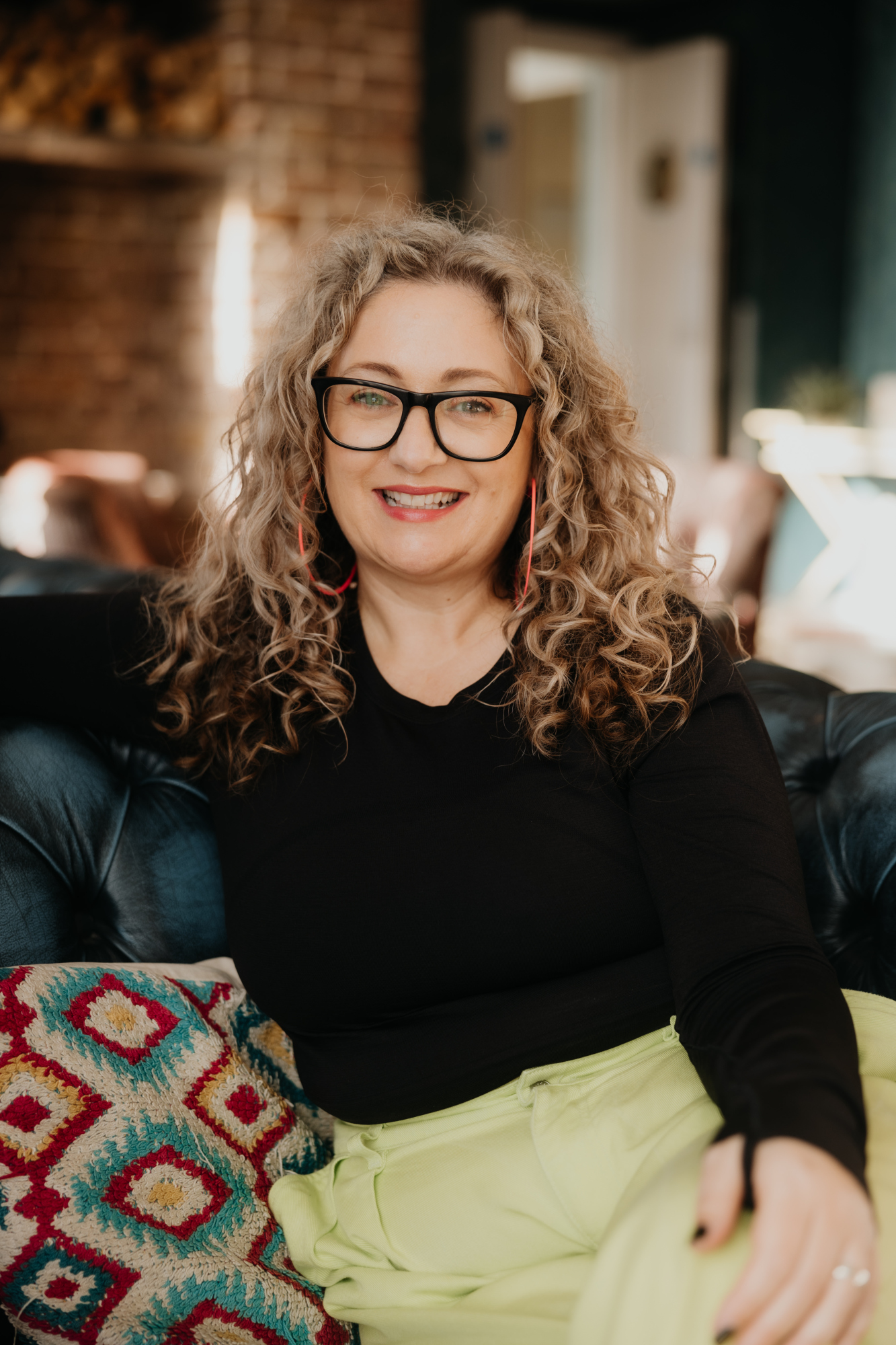
Sally Garozzo is a clinical hypnotherapist and curious explorer of the midlife and menopause transition inside her podcast The Menopause Mindset. After a winding journey through music, anxiety, and unexpected hormone chaos, she now helps others navigate their own transitions (not just limited to menopause) through hypnotherapy and coaching. Her passion is helping others reclaim agency over their lives during menopause and beyond. Visit her at sallygarozzo.com and on Instagram and Facebook.

Free Relaxation Hypnosis
Drift into a wonderful state of relaxation fully guided by me to help your body and mind rest and restore....and breathe.
